Project Overview
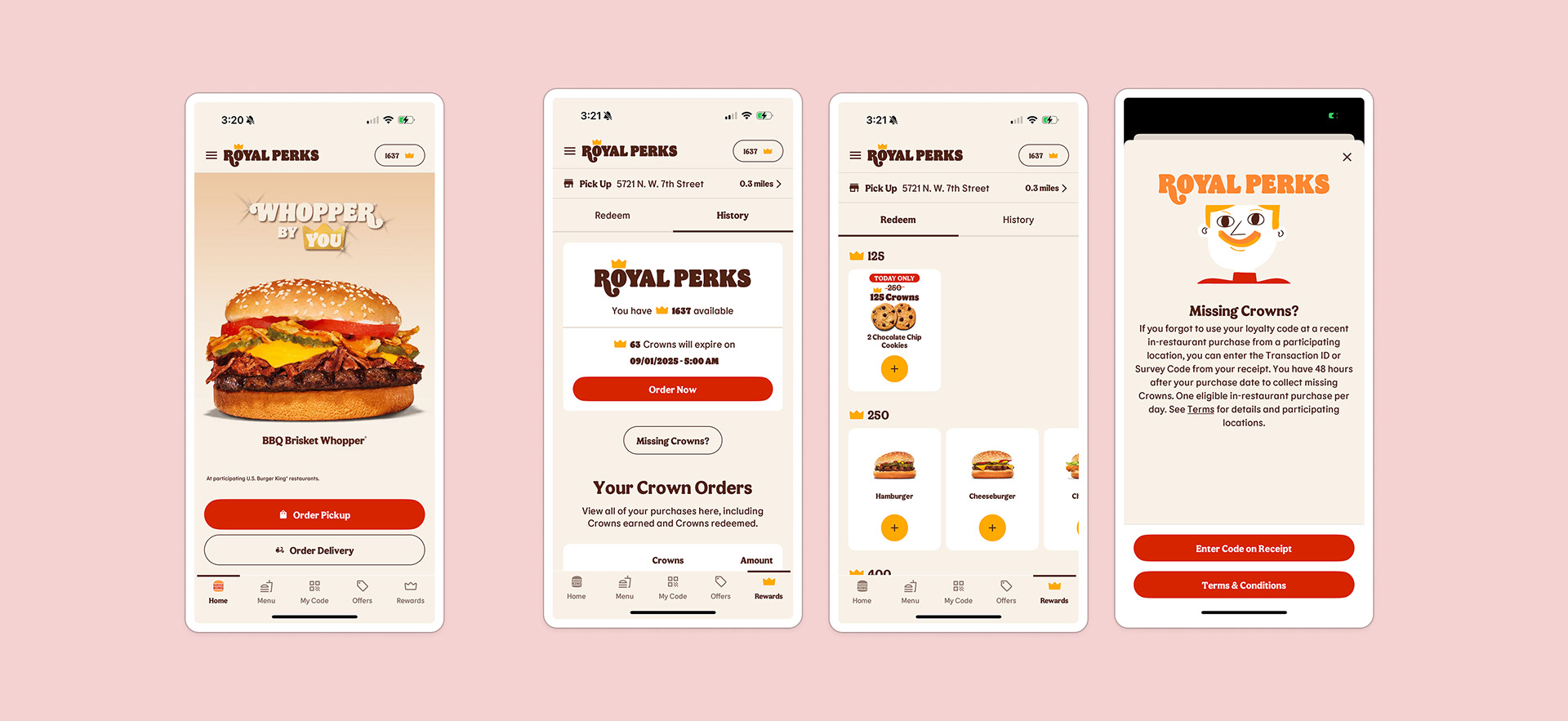
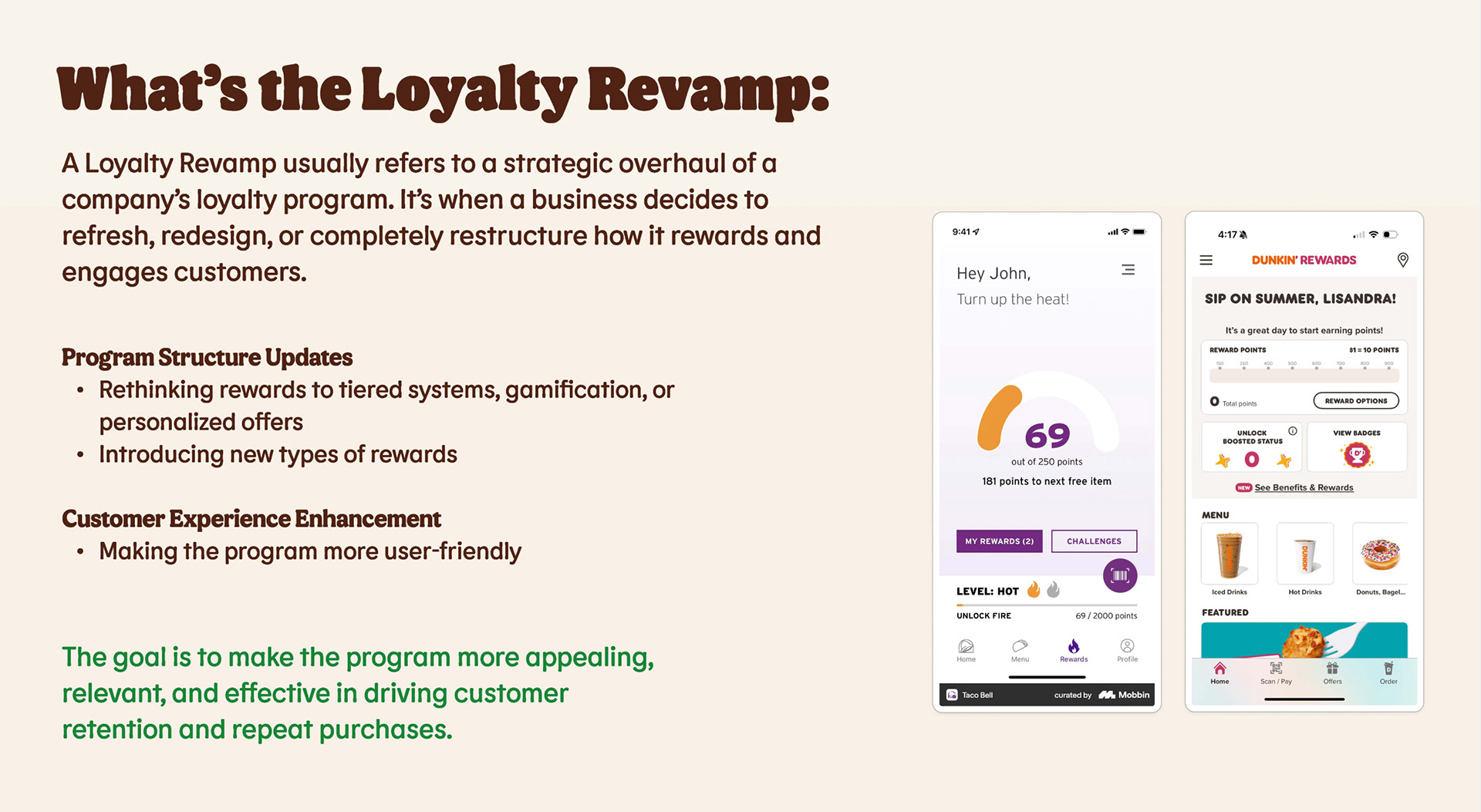
The BK loyalty program, Royal Perks, had never undergone a meaningful refresh or redesign to better support the guest experience. Its existing app section was limited and incomplete, offering little value or engagement. As part of the program’s revamp, we introduced a new Loyalty hub featuring progress trackers, badges, and challenges.
These elements align with established UX patterns in leading QSR apps (e.g., Starbucks, McDonald’s, Dunkin’, Chick-fil-A) because they effectively combine behavioral psychology, gamification, and clear value communication—all of which are essential for high-frequency, low-involvement customer journeys.
My Role
As the lead designer, I guided the project from discovery through final implementation while working closely with another designer. I championed design-centric decision-making across marketing and product teams, shaped the overall direction, and remained hands-on throughout the process to ensure a cohesive, guest-focused outcome.
1. Align user insights with product and marketing goals to drive a cohesive design strategy
2. Lead end-to-end design—from research and concepting to final execution—with a focus on usability and consistency.
3. Identify experience gaps and opportunities informed by behavioral psychology, gamification, and clear value communication.
4. Improve key flows to create a more intuitive and engaging experience
5. Enhance and maintain the design system while clearly communicating concepts to stakeholders for alignment
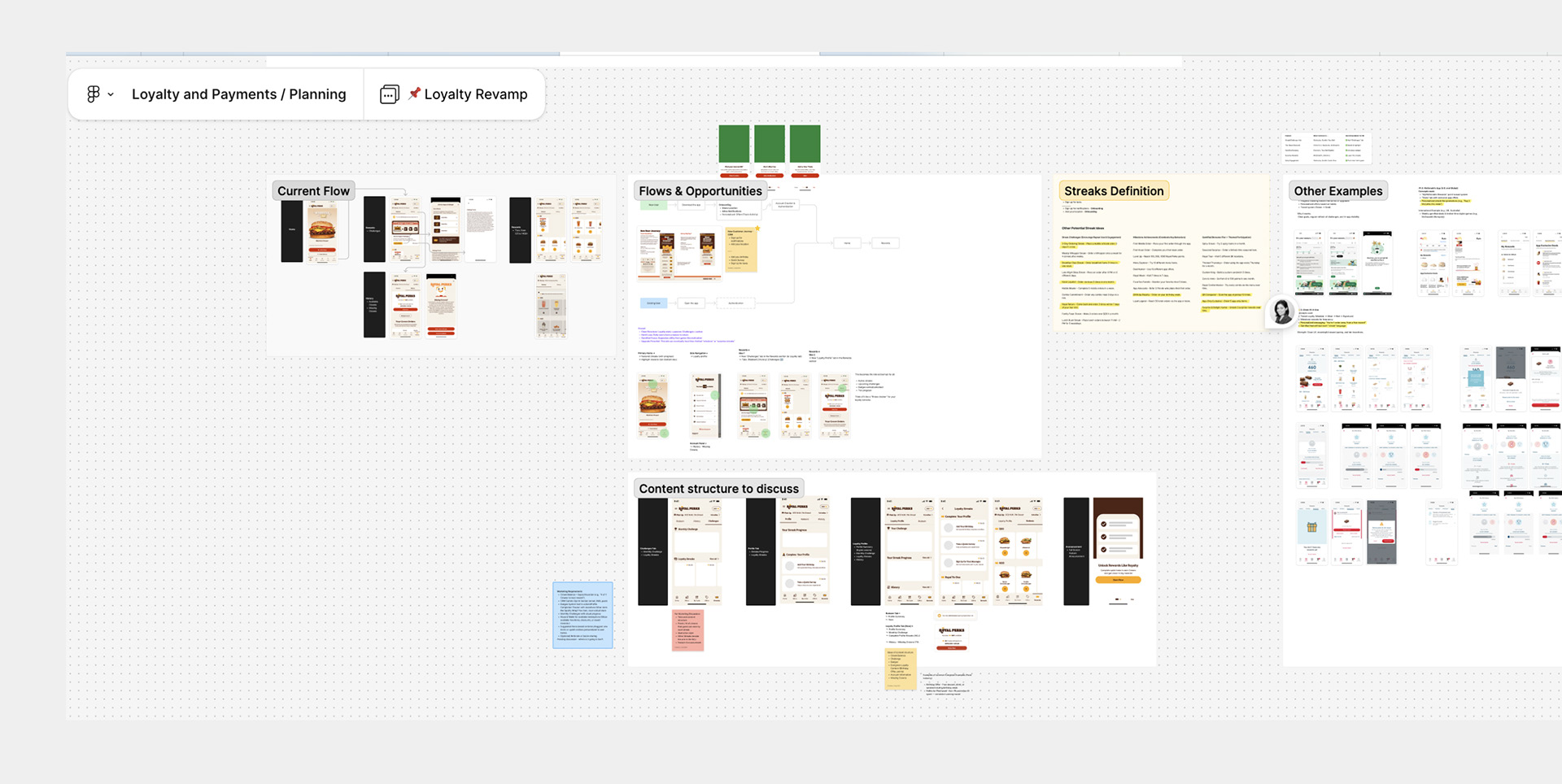
Example of a FigJam board containing initial analysis for alignment with marketing and product teams.
Understanding the Audience, Business, and Marketing Goals
Target Audience & Data
We grounded our approach in key insights from marketing reports, analyzing audience behavior, engagement patterns, and loyalty performance metrics to ensure the experience aligned with guest expectations and business needs.
We grounded our approach in key insights from marketing reports, analyzing audience behavior, engagement patterns, and loyalty performance metrics to ensure the experience aligned with guest expectations and business needs.
Workshops & Insight Gathering
Through loyalty planning workshops, we collaborated across teams to define content hierarchy, refine navigation, and shape the overall design direction. These sessions helped align marketing, product, and design around shared goals and measurable outcomes.
Through loyalty planning workshops, we collaborated across teams to define content hierarchy, refine navigation, and shape the overall design direction. These sessions helped align marketing, product, and design around shared goals and measurable outcomes.
Competitive Analysis
We benchmarked our experience against leading competitors and industry standards to uncover opportunities for improvement and differentiation. This included reviewing design trends, loyalty innovations, and best practices within the QSR space and adjacent industries.
We benchmarked our experience against leading competitors and industry standards to uncover opportunities for improvement and differentiation. This included reviewing design trends, loyalty innovations, and best practices within the QSR space and adjacent industries.
Solution
The design solutions encounter the following aspects:
Offers Groups
A simplified way for users to browse and understand related offers. This feature allows guests to quickly identify a group of available deals and choose one to redeem, reducing friction and improving discoverability.
A simplified way for users to browse and understand related offers. This feature allows guests to quickly identify a group of available deals and choose one to redeem, reducing friction and improving discoverability.
Removing Rewards Stacking
We introduced the ability to redeem one reward within a one-hour window—aligning with common QSR standards. As part of this update, we also refreshed the existing rewards section with new tier levels, clearer numbering, and a more intuitive menu item structure.
We introduced the ability to redeem one reward within a one-hour window—aligning with common QSR standards. As part of this update, we also refreshed the existing rewards section with new tier levels, clearer numbering, and a more intuitive menu item structure.
Loyalty Section
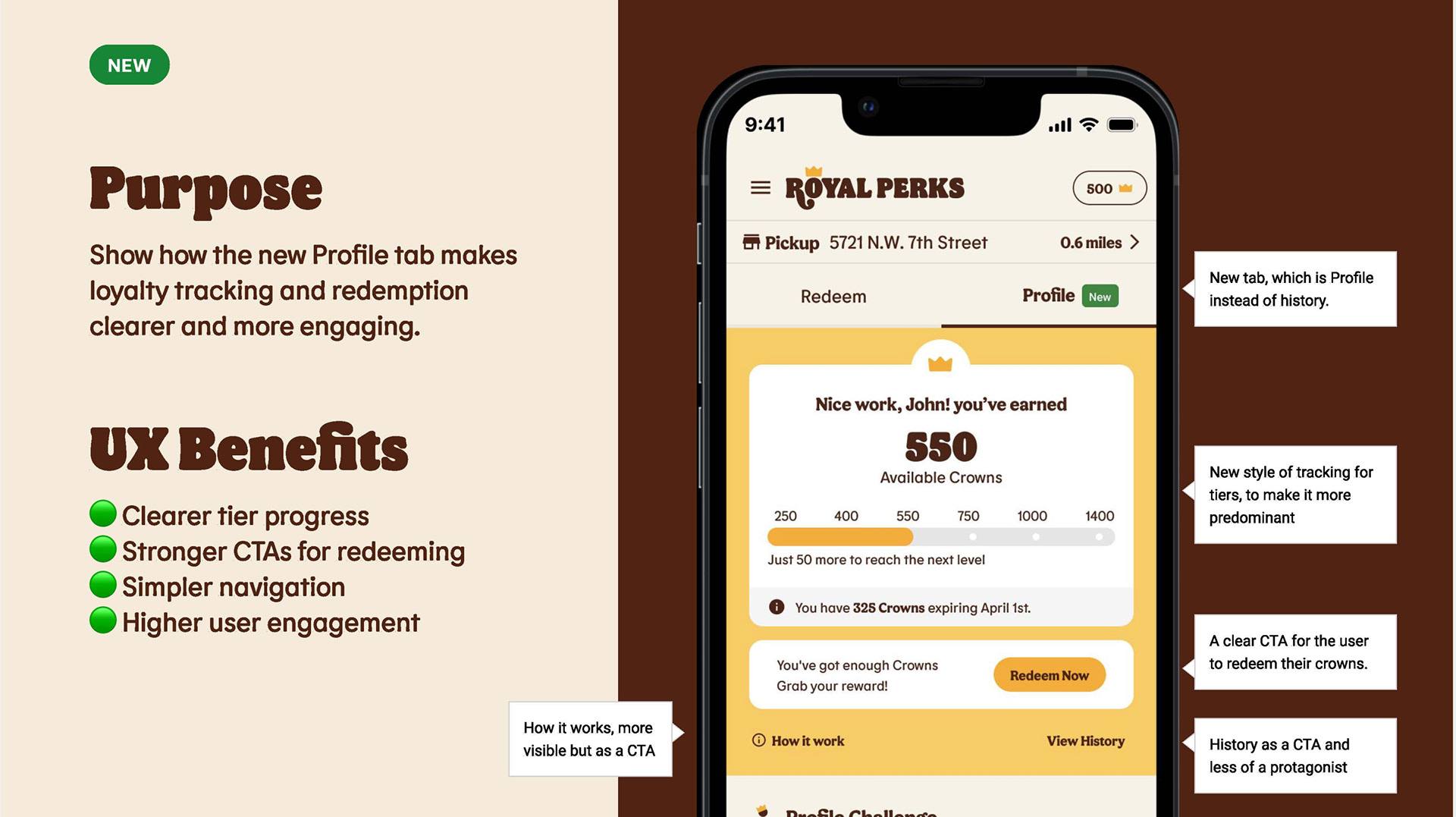
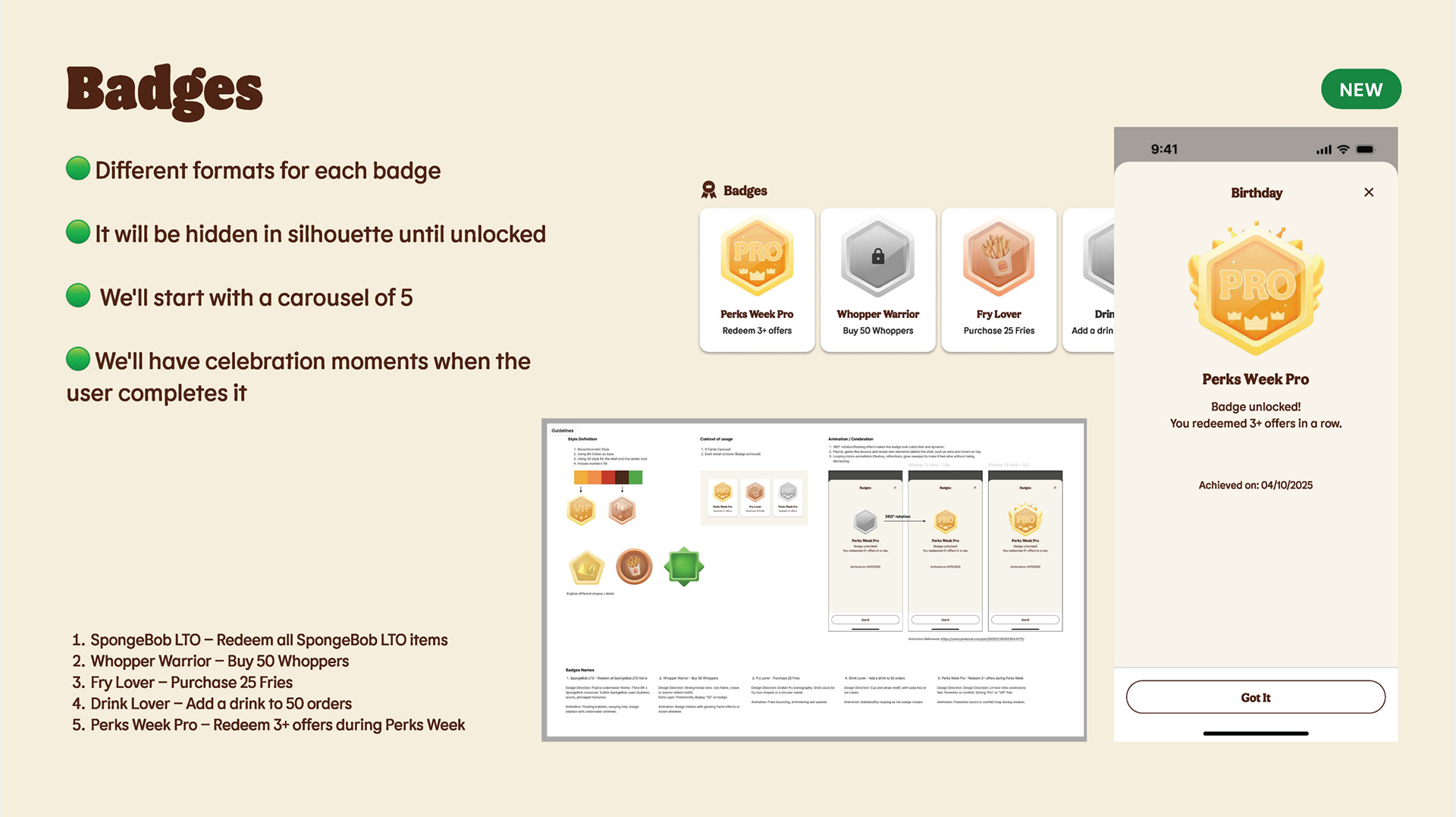
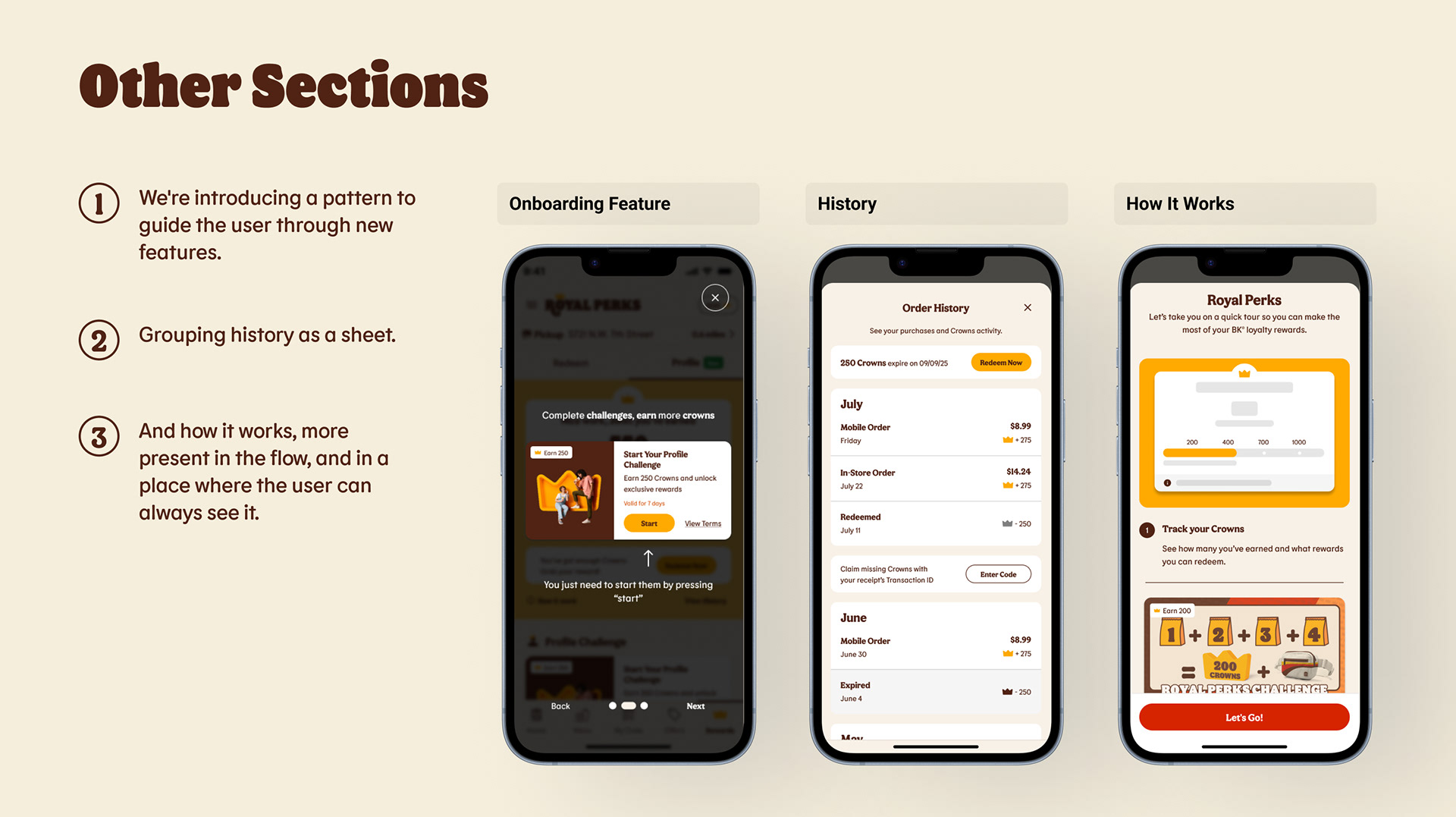
A new dedicated Loyalty hub featuring a points tracker, challenges, and badges. This update brings transparency, motivation, and gamification to the Royal Perks experience, encouraging repeat engagement and strengthening long-term loyalty.
A new dedicated Loyalty hub featuring a points tracker, challenges, and badges. This update brings transparency, motivation, and gamification to the Royal Perks experience, encouraging repeat engagement and strengthening long-term loyalty.
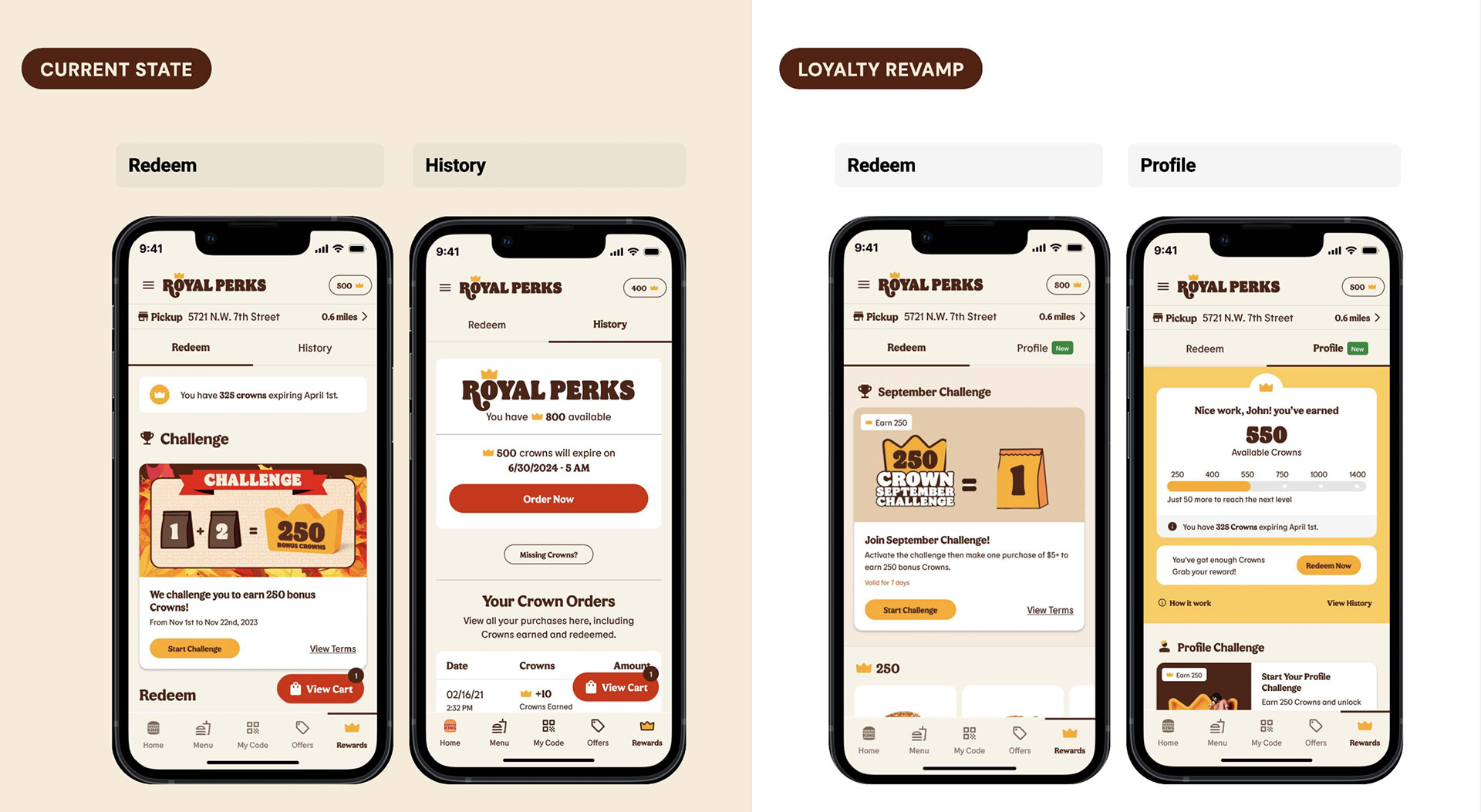
Left — Legacy design
Legacy design provides no clear indication of users’ progress through tiers, making it challenging to understand achievements or next steps.
Legacy design provides no clear indication of users’ progress through tiers, making it challenging to understand achievements or next steps.
Right — Improved design
Introduces a Profile tab featuring profile challenges, badges, and a clear tier progress bar to communicate users’ current status and progress.
Introduces a Profile tab featuring profile challenges, badges, and a clear tier progress bar to communicate users’ current status and progress.
Actions to Improve the Loyalty Experience
Our goal was to elevate the loyalty program by increasing user engagement while maintaining the right balance of functional + fun. The experience needed to clearly communicate the program’s value proposition and address the needs of both guests and the business.
Value for Customers
Loyalty should feel rewarding, effortless, and enjoyable:
“Reward me for what I’m already doing.”
“Make saving easy and visible.”
“Give me fun, small accomplishments.”
This meant designing an experience that makes progress obvious, creates moments of delight, and offers optional engagement without adding friction.
Value for the QSR Brand
The program also needed to advance key business objectives:
- Increase visit frequency, basket size, and long-term retention
- Influence customer behavior (timing, reward choices, repeat usage)
- Ultimately, the goal is to increase lifetime value by turning casual visitors into habitual customers.
Design Principles
To achieve this, we focused on:
- Not interrupting core flows like ordering or payment
- Providing optional engagement for users who want deeper interaction
- Creating micro-moments of delight that elevate the experience without overwhelming it

Visit the BK app to 👉 explore the whole experience.
Final Reflection
This project marked a meaningful shift in how Royal Perks supports and motivates guest engagement. By introducing a centralized Loyalty Hub with progress tracking, badges, and challenges, we transformed a previously fragmented experience into one that clearly communicates value and encourages repeat behavior.
While the experience has been successfully launched, its long-term impact is still being measured. Early signals suggest improved clarity and engagement, and upcoming insights will help validate how gamification and behavioral patterns influence loyalty participation over time. This work establishes a strong foundation for iteration, optimization, and future expansion of the BK loyalty ecosystem.